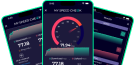


WiFi Speed Test
On one click, perform a WiFi Speed Test. Click the “GO” button to test your internet speed. Our internet speed test utility works with all types of connections. You can use it to check Wi-Fi, broadband, fiber, or satellite internet speeds.
For each speed test, you get the necessary performance metrics, such as ping, jitter, download speed, and upload speed. The test is carried out from the nearest host server, providing accurate internet speed test results. However, you can also select the desired host server, as per your requirement.
 Real-time Testing
 Fast & Reliable Results
 Shareable Internet Speed Results
How to Check WiFi Speed?
Wifispeed.io makes internet speed test simple. Follow these steps to speed test WiFi or any other internet connection.
- Connect to WiFi, broadband, or any other connection you want to test.
- Open the web browser.
- Open the WiFi Speed Test website.
- Click the “GO” button to run speed test.
- Let the tool test internet speed.
- Check results.
- Download Speed (measured in Mbps)
- Upload Speed (measured in Mbps)
- Ping Latency Rate (measured in ms)
- Jitter Levels (measured in ms)
Internet Speed Test Metrics Our Tool Measures
When you run speed test using Wifispeed.io, it measures several essential metrics of your internet connection. These metrics showcase the quality of your internet connection.

Download Speed
Download speed measures how fast your device is receiving data from the internet. A high download speed is good for receiving messages, files, videos, images, and browsing.

Upload Speed
Upload speed measures how fast your device is transferring data to the internet. Your upload speed affects how quickly you can send messages and upload files.

Ping (Latency)
Ping is the reaction time of internet connection. It is measured in milliseconds (ms) and indicates how long data packets take to travel from your device to the internet server and back.

Jitter
Jitter measures in milliseconds (ms) the consistency of your internet connection. It shows how much the delay changes while data travels between your device and the server.
How WiFi Speed Test Work?
Our WiFi speed test tool checks your internet connection by pinging a server near your location. Before you run speed test, you can change the server to another one or your desired server.
During an internet speed test, it sends and receives small data packets between your device and the selected server. It then measures how quickly the data travels back and forth. This helps calculate ping, jitter, and upload speed.
To measure download speed, the server sends test data to your device. The Internet speed test tool checks how much data your connection can receive within a few seconds to accurately calculate your download speed.
Types of Network Speed Test You Can Perform
Our WiFi Tester supports all types of network speed test. You can use it to run a fast speed test and see whether you are getting the promised bandwidth.
WiFi Speed Test
Check WiFi speed of your internet connection with one click. Using this WiFi speed checker, you can see whether your network provides a stable and fast internet speed for browsing, streaming, gaming, etc.
Mobile Data Speed Test
Checks the stability of your cellular internet connection. Wifispeed.io lets you check the internet speed of 3G, 4G, 5G, or LTE mobile data speeds directly from your device.
Fiber Speed Test
Measures the performance of fiber optic internet connections. Use it to test upload speed, download speed, ping, and jitter of any fiber internet connection.
Broadband Speed Test
Checks the speed of broadband internet connections such as DSL, cable, or fixed wireless internet. It helps you monitor your internet performance and check stability.
How Much Internet Speed Do You Really Need?
| Internet Speed | What You Can Do | Suitable For |
|---|---|---|
| 25 Mbps | Web browsing, emails, social media, and music streaming | Basic internet usage |
| 50 Mbps | HD video streaming, online classes, and video calls | Small households |
| 100 Mbps | Streaming on multiple devices, remote work, and faster downloads | Families and remote workers |
| 300 Mbps | 4K streaming, online gaming, and large downloads | Gamers and heavy users |
| 500 Mbps | Smooth performance across many connected devices and smart home systems | Large households |
| 1 Gbps+ | Ultra-fast downloads, cloud gaming, 8K streaming, servers, and professional work setups | Businesses, creators, and power users |
When Should You Test Your Internet Speed?
You should run an internet speed test whenever you notice changes in your connection performance. However, here are some common situations when you should check your internet speed:
 Websites Loading Slowly
When websites or pages take too much time to load then you have to test your internet bandwidth.
 Videos Keep Buffering
Videos keep buffering or quality drops while streaming movies, shows, or online content.
 High Ping or Gaming Lag
Feels high ping or lag during online games affects gameplay and overall responsiveness.
 Video Calls Freezing/Lagging
If your calls freeze, drop, or have poor audio and video quality during meetings or conversations.
 Changing Your Router
If you install new router or update network settings, then testing connection speed to confirm your network is performing well or not.
 After ISP Upgrade
After upgrading your internet plan, speed test help to verify are you getting right speed promised by your service provider.
Why Test WiFi Speed with Wifispeed.io?
 Give 4 Key Metric
It run internet speed test in one click and provide download, upload, ping, and jitter results.
 Fast Test Result
With this you get accurate internet speed results in less than 30 seconds.
 No Signup Required
Our WiFi speed checker helps to run unlimited speed tests without registration. It 100% free, secure, and privacy protected.
 Multi Platform Support
It compatible with all devices and works smoothly on Desktop, Mobile, Tablet, and more.
 Global ISP Compatible
It supports all major internet service providers. For better speed test result automatically selects the nearest server.
 Real Time Results
It run real-time speed tests and instantly provides the network performance insights which delivered by your internet provider.
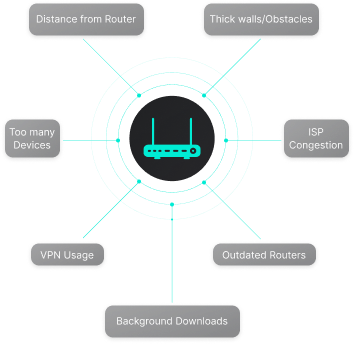
What Affects Your WiFi Internet Speed?
| Factor | Impact level | Description |
|---|---|---|
| Distance from Router | High | The farther you are, the weaker the signal. |
| Thick Walls / Obstacles | High | Walls and objects can block or weaken WiFi signals. |
| ISP Congestion | High | Network traffic during peak hours may slow you down. |
| High number of Devices | Medium | More connected devices share the available bandwidth. |
| VPN Usage | Medium | VPNs can add extra distance and reduce speed. |
| Outdated Routers | Medium | Old routers may not support high-speed connections. |
| Background Downloads | Low | Downloads running in background consume bandwidth. |
| Weather Conditions | Low | Extreme weather can slightly affect signal quality. |
How to Fix Slow WiFi Internet Speed?
Follow these simple steps to improve your connection speed.

Restart Your Router
Restart your Wi-Fi router and modem by turning it off for 10 seconds and turning it back on.

Enhance WiFi Signal Strength
Move closer to the Wi-Fi router. OR place your router in a central or open location and set away from walls & electronic appliances.

Limit Connected Devices
Reduce the number of connected devices. Disconnect devices that are not in use to free up bandwidth.

Switch to 5GHz WiFi Band
Use a modern dual-band or fiber-compatible router, such as Wi-Fi 6 or Wi-Fi 7. Switch between 2.4 GHz and 5 GHz Wi-Fi bands for less interference and faster speeds.

Update Router Firmware
Keep your router firmware up to date for better performance and security.

Stop Background Usage
Stop background downloads and updates. Upgrade to a better internet package if needed.
Frequently Asked Questions (FAQs)
Why is my WiFi so slow?
Your WiFi can be slow for many reasons. These primarily include poor router placement, outdated router firmware, metal objects, or other nearby obstructions. Radio-frequency interference and network congestion also slow down wifi internet speed.
How fast is my WiFi?
To check how fast your WiFi internet connection is, run a speed test. Simply, visit Wifispeed.io and press the “Go” button. Our WiFi speed checker will run a speed test in real time and show you how fast your connection is.
What is a good Download Speed?
The exact speed depends on your internet usage habits and requirements. However, a download speed over 100 Mbps is generally considered good. 50 Mbps to 100 Mbps is considered a fair internet speed.
What is a good upload speed?
A good upload speed depends on how you use the internet. Here is a simple idea of good upload speeds for different activities:
- 5-10 Mbps for basic browsing and sending emails
- 10-25 Mbps for HD video calls and online classes
- 25-50 Mbps for online gaming and regular file uploads
- 50-100 Mbps for live streaming and large file sharing
- 100 Mbps+ for content creators, businesses, and heavy cloud usage
Is Ethernet Faster than WiFi?
Yes, Ethernet usually provides faster internet speed than WiFi. This is because the data is getting transferred via cable. No physical obstructions or interference are involved, resulting in less data packet loss. However, the actual performance varies with the type and quality of Ethernet cable.
Why does My Internet Speed Fluctuate?
Your internet speed may fluctuate due to several reasons. These primarily include:
- Network congestion
- Weak WiFi signals
- Background downloads
- Outdated hardware
- Too many connected devices
Sometimes, your internet service provider may also slow down speeds during peak hours. Run a bandwidth speed test regularly to check your actual connection speed and identify sudden drops in performance.